Klara Wolf · 6 October 2026
Exploring Secure Data Handling Practices Within Localized Note-Taking Ecosystems for Independent Researchers
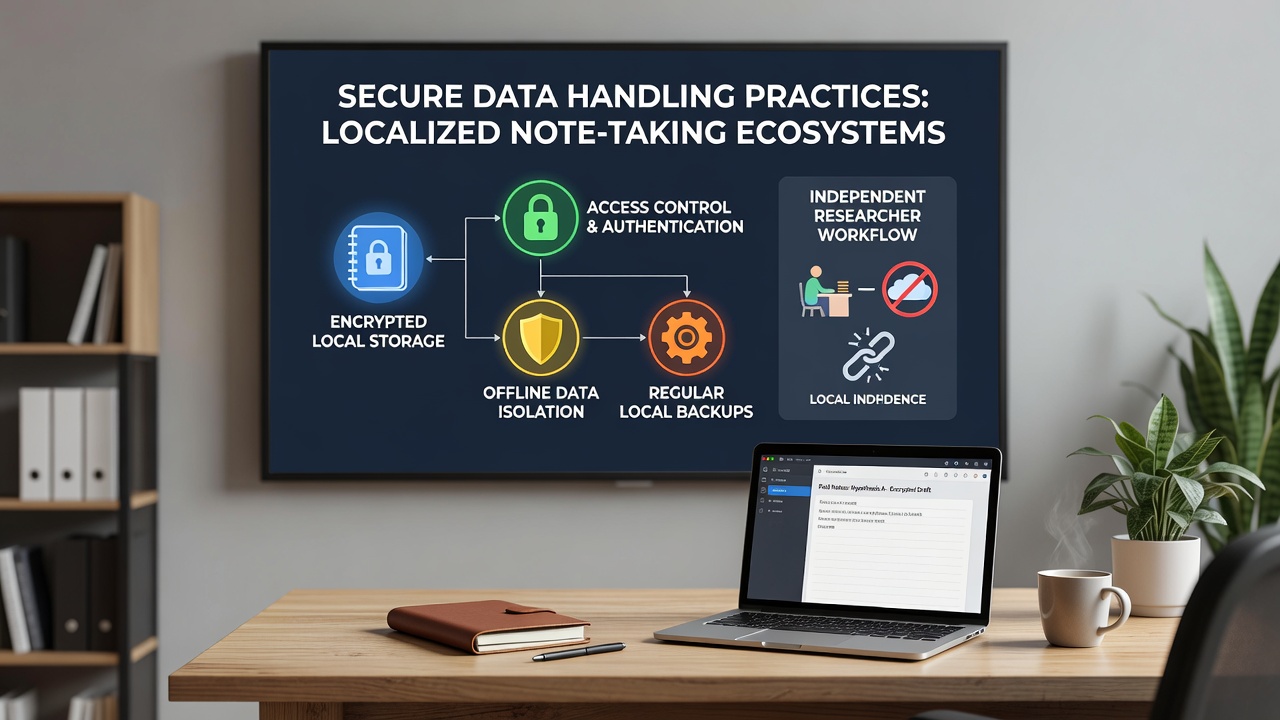
Localized note-taking ecosystems operate through software that stores information directly on user devices, and independent researchers rely on these systems to maintain control over sensitive project data without routing it through external servers. Data remains on the local machine throughout its lifecycle, which shifts security responsibilities toward device-level protections and encryption protocols that researchers must configure themselves.
Core Components of Local Storage Security
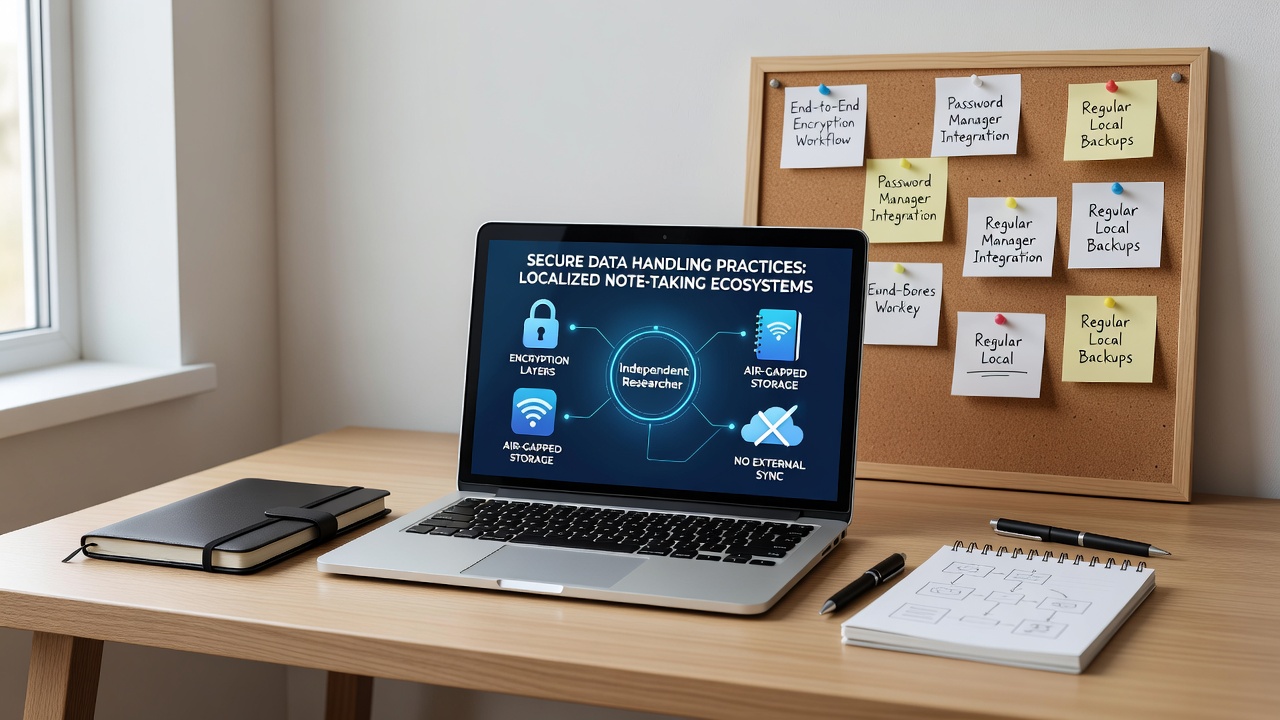
Encryption forms the foundation of these practices, with algorithms such as AES-256 applied to files at rest and during any transfer between devices. Researchers implement full-disk encryption on operating systems while layering application-specific tools that encrypt individual note databases separately. Access controls operate through password managers integrated with the note-taking software, and multi-factor authentication adds verification steps before files open on the local system.
Backup procedures use encrypted external drives or local network storage that never connects to cloud services, and versioning tools track changes without transmitting data beyond the immediate environment. Regular integrity checks verify that stored files have not been altered, which helps detect unauthorized access attempts on the device itself.
Regulatory Frameworks and Compliance Requirements
Independent researchers handling personal or institutional data must align practices with standards that vary by region, and guidelines from the National Institute of Standards and Technology outline encryption minimums for research records stored locally. In October 2026 new updates to data residency rules in several jurisdictions reinforced requirements for offline systems to maintain audit logs that demonstrate compliance during reviews. Australian Research Council resources on research data management provide additional frameworks that emphasize local encryption and access logging for projects involving human subjects.
European data protection rules require explicit documentation of how localized systems prevent unauthorized disclosure, and researchers document encryption keys separately from the note databases to meet these standards. Canadian privacy legislation similarly directs attention toward physical device security alongside software measures, which encourages the use of hardware tokens for key management in local environments.
Implementation Strategies Across Research Workflows
Researchers begin by selecting note-taking applications that support open-source encryption libraries and allow offline operation without mandatory accounts. Configuration involves setting strong passphrases, enabling automatic encryption for new entries, and establishing scheduled local backups that run through scripts verified for security. One study revealed that teams using these combined steps reduced incident response times because data never left the controlled device perimeter.
Training focuses on recognizing phishing attempts that target local credentials, and periodic reviews examine log files generated by the note-taking software for unusual access patterns. Those who have studied these systems note that combining biometric device locks with software-level encryption creates layered defenses that remain effective even if one component is compromised.
Challenges in Maintaining Localized Security
Device loss or theft presents immediate risks because all data resides on the hardware, and researchers address this through remote wipe capabilities that activate only after authentication confirms the device owner. Software updates must be applied manually to avoid introducing vulnerabilities, which requires ongoing attention to patch management outside automated cloud delivery models.
Interoperability between different local applications can create export-import steps that temporarily expose data, and protocols now standardize encrypted transfer formats to minimize these windows. Observers note that scaling these practices across multiple devices demands consistent key distribution methods that avoid central servers entirely.
Emerging Tools and Techniques
Developments in October 2026 included refined open-source utilities that integrate directly with localized note-taking platforms to automate key rotation and integrity verification. These tools generate reports on access events that researchers can review without external transmission, and they support export to standardized audit formats required by funding bodies.
Hardware security modules designed for portable use now pair with note-taking applications to store encryption keys offline, which reduces reliance on software-only protection. Data from multiple regional reports indicates that adoption of such modules has increased among researchers managing longitudinal studies where data sensitivity remains high over extended periods.
Conclusion
Secure data handling in localized note-taking ecosystems centers on encryption, access controls, and disciplined backup routines that keep information under direct researcher oversight. Compliance with regional standards continues to shape implementation choices, and ongoing tool refinements support these practices without introducing external dependencies. Researchers who maintain these protocols preserve data confidentiality through consistent application of established technical measures.