
Klara Wolf · 20 October 2026
Mapping Intellectual Threads Across Solo Scholar Workflows in Emerging Annotation Platforms
Scholars working alone have turned to annotation platforms as tools for organizing complex research materials, and these systems allow users to highlight passages, add comments, and link concepts across multiple documents in ways that create visible threads of thought. Emerging platforms integrate visual mapping features that display connections between annotations as nodes and edges, which helps researchers track how individual ideas evolve over time without requiring collaboration from others. Data from academic technology surveys indicate that adoption rates for such tools rose steadily through 2025, driven by the need for efficient personal knowledge management amid growing volumes of digital sources.
Core Features of Annotation Platforms for Individual Use
Modern annotation platforms provide layered markup options that go beyond simple highlighting, and they include tags, categories, and relational links that scholars apply to build structured repositories of insights. Researchers often start with raw source material in PDF or web formats, then layer annotations that reference specific text segments while connecting those segments to broader thematic clusters. Platforms such as those developed in recent open-source projects emphasize export functions that preserve these connections in standard formats, allowing seamless transfer to other personal databases or visualization software. Observers note that solo scholars value these features because they reduce the cognitive load of recalling where a particular idea originated across dozens of readings.
Workflow Patterns Observed in Solo Research
Many independent researchers follow a sequence that begins with broad ingestion of sources, moves to targeted annotation, and concludes with iterative mapping sessions that reveal patterns not apparent in linear reading. This process typically involves importing documents into the platform, applying initial tags based on keywords or hypotheses, and then refining connections as new material arrives. Studies from institutions like the University of Melbourne show that scholars who maintain consistent annotation habits report higher rates of idea retention and cross-reference accuracy compared with those relying on separate note files. But here's the thing: the mapping layer adds another dimension because it visualizes how one annotation influences or contradicts another, turning isolated comments into networks that reflect the scholar's evolving argument structure.
Intellectual Thread Mapping in Practice
Intellectual threads emerge when annotations share common tags, cite one another, or point to overlapping concepts, and platform interfaces render these relationships as interactive graphs that users can expand or collapse. Solo scholars use these graphs to identify gaps in their reasoning or to trace the development of a single theme across multiple source types, such as historical texts, contemporary studies, and primary data sets. In October 2026, updates to several annotation tools introduced automated suggestion algorithms that propose potential links based on semantic similarity, which researchers at the European Research Council have examined for their impact on discovery speed. Those who've studied these systems find that the graphs help maintain coherence in long-term projects where months may pass between revisiting certain sources.
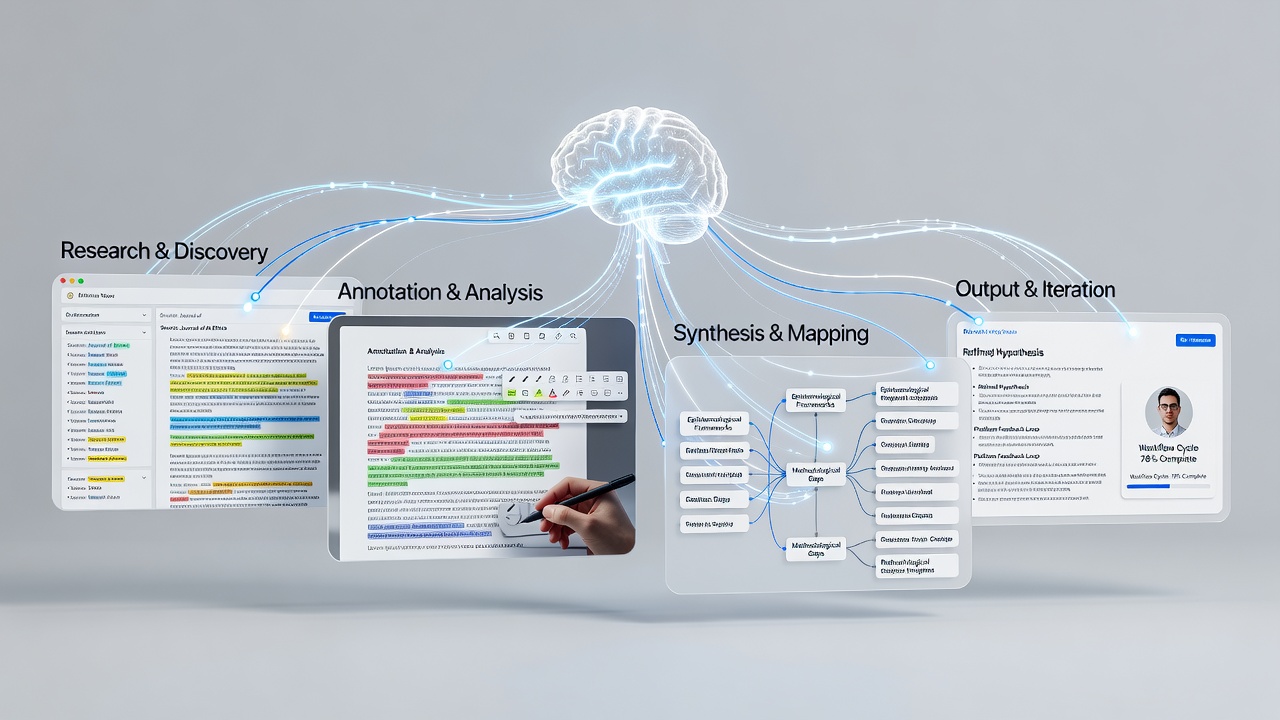
One documented workflow involves a historian who annotated archival letters with geographic and temporal tags, then used the platform's mapping view to plot how correspondence networks shifted across decades. The resulting visualization highlighted previously unnoticed clusters of exchange that informed the final analysis. Similar patterns appear in scientific literature reviews, where researchers connect methodological critiques across papers to surface recurring limitations in a field. Platforms support this by allowing bidirectional links, so an annotation in one document can reference and be referenced by annotations elsewhere without manual duplication of content.
Integration with Broader Research Ecosystems
Annotation platforms increasingly connect to citation managers, reference databases, and personal wikis, which extends the reach of mapped threads beyond the original tool. Scholars export graph data to formats compatible with network analysis software, enabling quantitative examination of idea centrality and influence within their own collections. Reports compiled by Statistics Canada on digital research practices note rising interest in such integrations among independent academics who lack institutional support staff. What's interesting is how these connections reduce duplication of effort, since an annotation created during initial reading remains accessible and editable throughout the project lifecycle.
Conclusion
Annotation platforms continue to evolve as environments where solo scholars construct and navigate intellectual threads through structured markup and visual mapping. The combination of annotation layers with graph-based overviews provides a practical framework for managing complex, self-directed research without external coordination. As new features appear and integration options expand, the documented workflows demonstrate consistent patterns of idea organization that support sustained scholarly output across disciplines.