Klara Wolf · 22 September 2026
The Evolution of Interconnected Idea Mapping in Distributed Team Environments
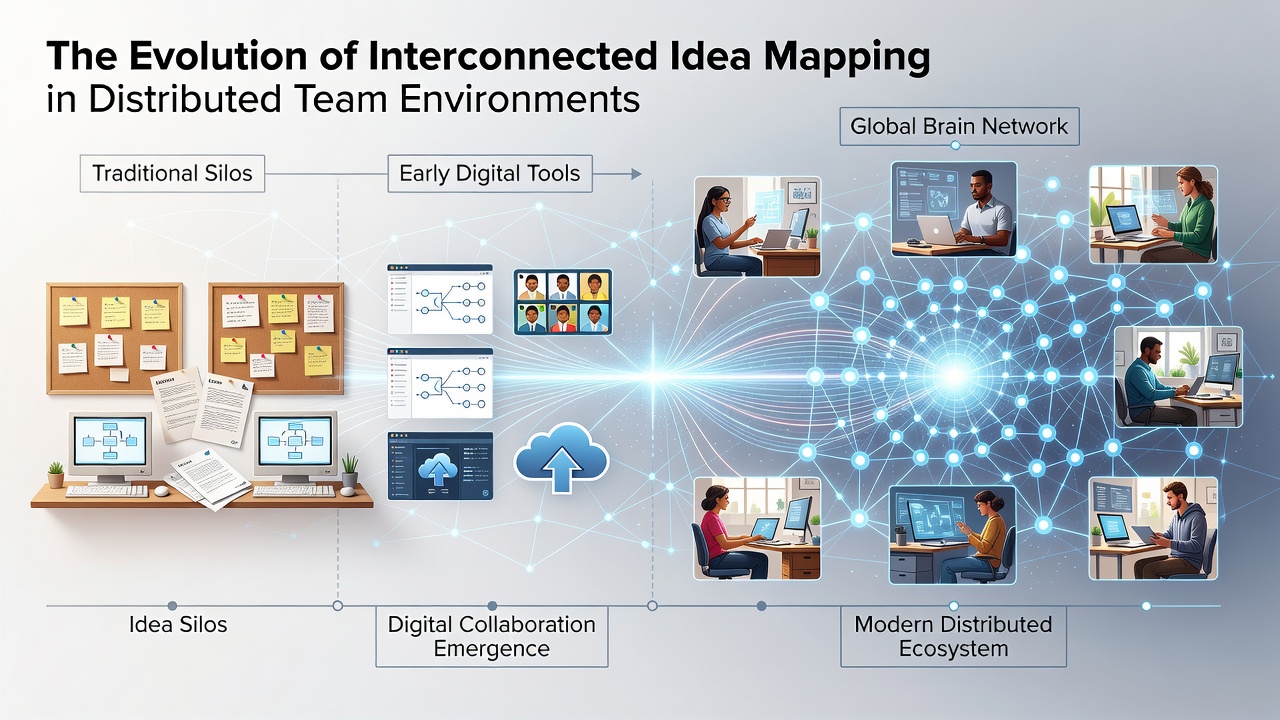
Distributed teams have relied on interconnected idea mapping since the late 1990s when early collaborative software emerged to connect remote participants across different locations. Researchers at various institutions documented how these systems allowed groups to link concepts visually while working asynchronously and this approach grew steadily as internet infrastructure improved.
Early Digital Foundations
Initial platforms focused on basic shared canvases where users added nodes and connections in real time yet bandwidth limitations restricted complexity until broadband became widespread in the early 2000s. Data from academic studies shows that teams using these early tools reported clearer alignment on project goals because visual links replaced lengthy email threads and this shift marked the beginning of structured idea mapping in distributed settings.
By the mid-2000s companies integrated mind mapping features into enterprise software and observers note that European research groups played a key role in standardizing formats for cross-platform compatibility. Workers in multiple time zones benefited when maps updated automatically so changes made in one region appeared instantly elsewhere and this capability reduced miscommunication that often plagued global projects.
Expansion During Remote Work Growth
The 2010s brought widespread adoption as video conferencing tools paired with mapping applications and figures from industry reports reveal a sharp rise in usage after 2015. Distributed teams in tech and research fields started embedding live data feeds into their maps which allowed real-time updates from multiple sources without manual intervention and this interconnection proved essential for projects involving large datasets.
Integration of Advanced Features
Modern platforms now connect idea maps to databases calendars and communication channels so changes in one area trigger updates across the entire system. Australian government analyses of workplace technology highlight how such integrations support compliance requirements in regulated industries while maintaining team visibility and researchers continue to examine how these links affect decision speed in distributed environments.
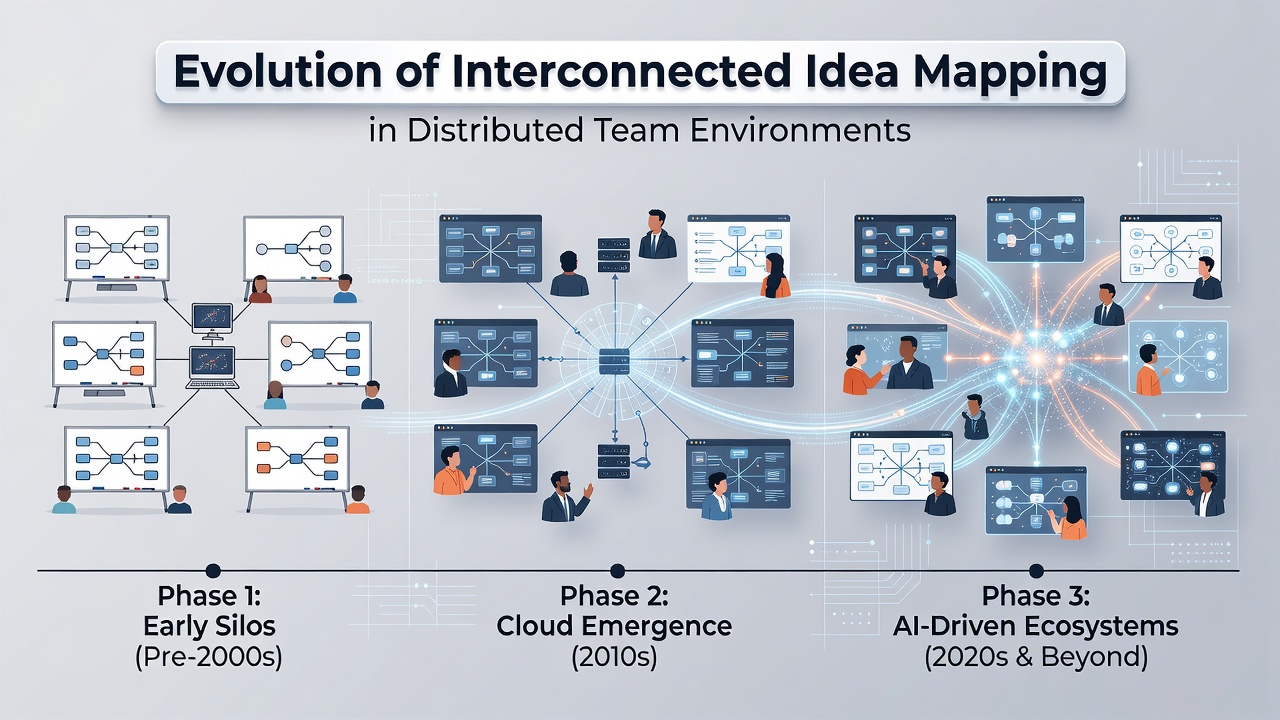
Artificial intelligence entered the space around 2020 and it automatically suggests connections based on content analysis while users retain control over final decisions. Studies conducted at Canadian universities indicate that AI-assisted mapping reduces the time required to organize complex information by measurable percentages and teams report improved retention of key relationships when the software highlights overlooked links.
Trends Observed in September 2026
As of September 2026 distributed teams increasingly rely on maps that incorporate version history and permission layers tailored to different roles and this development stems from earlier concerns about data integrity in shared environments. Reports from international research consortia show continued growth in adoption rates particularly among organizations operating across multiple continents where consistent visual frameworks help bridge cultural and linguistic differences.
Security enhancements now include end-to-end encryption for sensitive maps and regulatory bodies in various regions have issued guidelines that encourage these protections. Teams working on long-term projects benefit when maps integrate with project management systems so milestones appear alongside conceptual links and this layered approach keeps everyone aligned without additional meetings.
Conclusion
The progression from simple shared diagrams to fully interconnected systems reflects broader changes in how organizations structure collaborative work and data continues to support the value of these tools for distributed teams. Future developments will likely build on existing foundations as technology providers refine features based on user patterns observed in real-world settings.